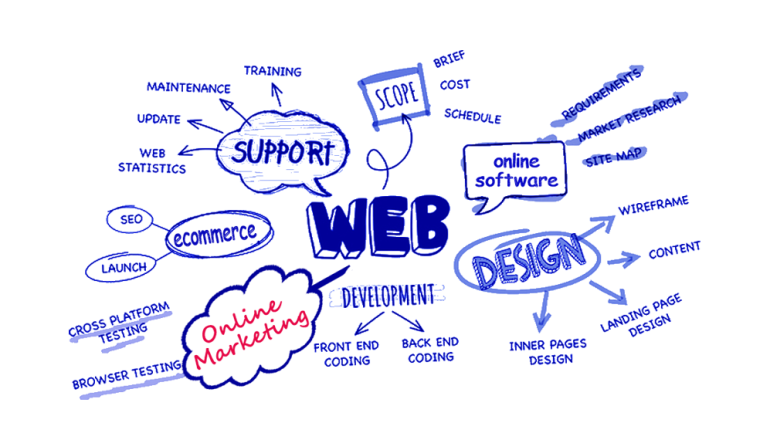
This conceptual diagram illustrating the multifaceted process of web development, design, and online marketing, emphasizing the interconnected nature of these components in creating a successful website.
At the core of the image is the word “WEB,” representing the central theme of web-related activities. Surrounding this core are several key areas: Design, Development, Online Marketing, and Support, each with their own sub-elements.
Starting with Design, this segment includes essential tasks such as “Wireframe,” “Content,” “Landing Page Design,” and “Inner Pages Design.” Wireframing is the blueprint stage where the website’s structure is planned. Content creation involves developing the text, images, and multimedia that appear on the site. Landing page design focuses on creating specific pages aimed at conversions, while inner pages design covers the layout and appearance of secondary pages.
The Development section is divided into “Front End Coding” and “Back End Coding.” Front-end coding deals with the visual interface and user interaction, typically utilizing HTML, CSS, and JavaScript. Back-end coding involves server-side programming, databases, and application logic, often using languages such as PHP, Python, or Node.js.
Online Marketing is highlighted as a crucial aspect for driving traffic and engagement. It includes strategies like “Cross Platform Testing” and “Browser Testing,” ensuring the website operates smoothly across various devices and browsers. Effective marketing integrates SEO, content marketing, and social media engagement to enhance visibility and user reach.
The Support section underscores ongoing website maintenance, training, updates, and statistics monitoring. Maintenance ensures the website remains secure and functional over time. Training enables clients or teams to manage the site independently. Regular updates keep the content fresh, and statistics analysis helps measure performance and user behavior.
Additionally, the diagram touches on project management elements such as “Scope,” “Cost,” and “Schedule,” critical for planning and delivering web projects efficiently. It also references “Requirements,” “Market Research,” and “Site Map,” foundational steps in understanding client needs and structuring the website.
In summary, this image comprehensively maps out the entire lifecycle of a website from conception through design, development, marketing, and support, emphasizing the collaborative and iterative nature of web projects to achieve optimal online presence.